- Home
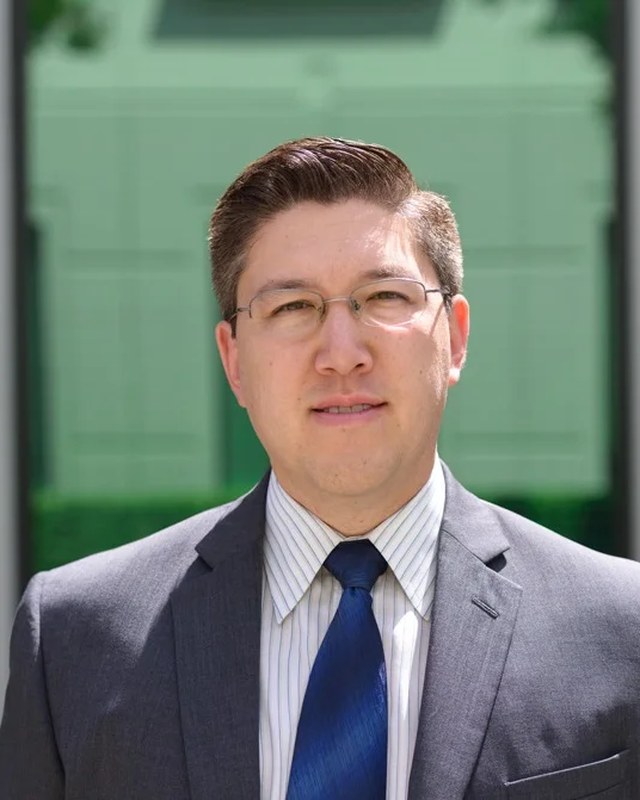
- Attorney Lee W. Gale
A playwright who became a trial lawyer.
Lee W. Gale has represented individuals, businesses and public agencies across Southern California since 2006: in criminal courtrooms, in civil litigation, and at the administrative table.
U.S. District Court, Central District of California
M.F.A., USC School of Dramatic Arts (2003)
B.A., UCLA (2000)
Civil litigation
Business & commercial
Family law
The road to a Rancho Cucamonga courtroom
Lee Gale was born in Columbus, Ohio, and has lived nearly his whole life in Los Angeles. He came to the law by an unusual road, and he has never especially tried to hide it.
Three degrees, in a deliberate order
He read English at UCLA, taking his bachelor’s degree in 2000. He then spent three years at the University of Southern California’s School of Theatre, earning a Master of Fine Arts in playwriting in 2003: three years of learning how a story is built, how a scene turns on a single line, and how an audience decides who to believe.
In 2003 he entered Southwestern Law School and was accepted into S.C.A.L.E., at that time the only two-year ABA-accredited legal education program in the nation. He took his Juris Doctor in 2006 and was admitted to the State Bar of California the same year.
The criminal practice
Mr. Gale served on a contract basis with Inland Defenders as conflict-panel defense counsel for the Victorville Superior Court. In that role he represented more than 300 clients at the pre-trial and trial phases of felony and misdemeanor matters.
Conflict-panel work is a particular kind of education. The volume is high, the facts are rarely tidy, and the clients are people having the worst year of their lives. You learn the local bench and the local prosecutors. You learn very quickly which arguments actually move a case and which ones only sound good. And you learn to read a police report the way a defense lawyer has to read one, looking for the gap between what an officer wrote down and what the evidence can actually support.
The public entity practice
Running alongside the defense work is something most criminal practitioners never do: Mr. Gale has advised public entities, including nearly all of the major school districts in California, on personnel matters, public contracts, public works construction and general administrative law.
That experience is the quiet asset in this practice. Representing an institution teaches you how institutions think: how they decide what to pursue and what to drop, where their own documentation is weakest, what their counsel is privately worried about, and which arguments carry weight with the people who sign off on a resolution. Clients on the other side of that table benefit from a lawyer who has sat at it.
Civil litigation and appeals
His civil practice covers the full arc of a dispute: pre-litigation demands and negotiation, pleadings, written and oral discovery, law and motion, mediation, arbitration, trial and appeal. He has written appellate and amicus briefs, and has argued a range of pre-trial and post-judgment motions in the civil courts.
Why the playwriting still matters
People occasionally treat the M.F.A. as a charming detour. It is not. A trial is a constructed thing. Twelve jurors arrive with their own assumptions and are asked to decide which account of events they can live with. Evidence decides cases, but only after somebody has arranged that evidence into a sequence a human being can follow and believe.
Opening statement, order of proof, cross-examination that lands, a closing that resolves rather than repeats, a sentencing memorandum that makes a judge see a person: these are problems of structure and character as much as they are problems of law. Three years at USC were spent on exactly that. It has proved to be more useful than it sounds.
Outside the practice
Mr. Gale hosts In the Grey, the firm’s podcast on the parts of the legal system that resist a clean answer: the discretion, the judgment calls, and the space between what the law says and what actually happens in a courtroom.
Degrees, admissions and practice history, year by year
- 2000
B.A. in English from the University of California, Los Angeles
Four years reading how arguments and narratives are constructed, which turned out to be vocational training after all.
- 2003
M.F.A. in Playwriting from the USC School of Theatre
A graduate degree in structure, character and persuasion at the University of Southern California.
- 2006
J.D., Southwestern Law School (S.C.A.L.E. Program)
Completed the nation’s only two-year ABA-accredited law degree, then in operation at Southwestern.
- 2006
Admitted to the State Bar of California
Licensed before all California state courts and the U.S. District Court for the Central District of California.
- Since 2006
Conflict-panel defense counsel, Victorville Superior Court
On contract with Inland Defenders; more than 300 clients represented in felony and misdemeanor matters at pre-trial and trial.
- Ongoing
Public entity and education law counsel
Advising nearly all major California school districts on personnel, public contracts, public works construction and administrative matters.
- 2016
Law Office of Lee W. Gale opens in Rancho Cucamonga
An independent practice serving the Inland Empire across criminal, civil, business and family matters.
Questions people ask
Since 2006. He was admitted to the California bar that year after graduating from Southwestern Law School, and has practiced in Southern California continuously ever since, representing individuals, businesses and governmental agencies. The Rancho Cucamonga office opened in 2016.
S.C.A.L.E. (the Southwestern Community Lawyering and Experiential program) was, at the time Mr. Gale completed it, the only two-year ABA-accredited law degree in the United States. It compresses the traditional three-year J.D. into a year-round, heavily clinical format. Graduates reach practice a year earlier and do so having spent proportionally more of their education on live-client work.
All state courts in California, and the United States District Court for the Central District of California, which covers Los Angeles, Orange, Riverside, San Bernardino, Ventura, Santa Barbara and San Luis Obispo counties.
It is not a gimmick, and it is not a substitute for evidence. What it changes is craft. A trial has a structure: an opening that frames what the jury is about to hear, an order of witnesses that builds rather than scatters, a closing that resolves it. A sentencing memorandum has to make a judge see a person rather than a docket number. Those are problems of narrative construction as much as law, and they are what a playwriting degree trains you to solve.
Bring the paperwork. Get a straight reading of it.
A consultation is a real working session. You leave knowing the charge or claim you face, the realistic range of outcomes, and what the next ninety days look like. $150 for the first thirty minutes, $225 for the first hour.
9333 Fairway View Pl #101, Rancho Cucamonga, CA 91730 · Monday - Friday, 9:00 am - 5:30 pm